Organic waste to baseload power
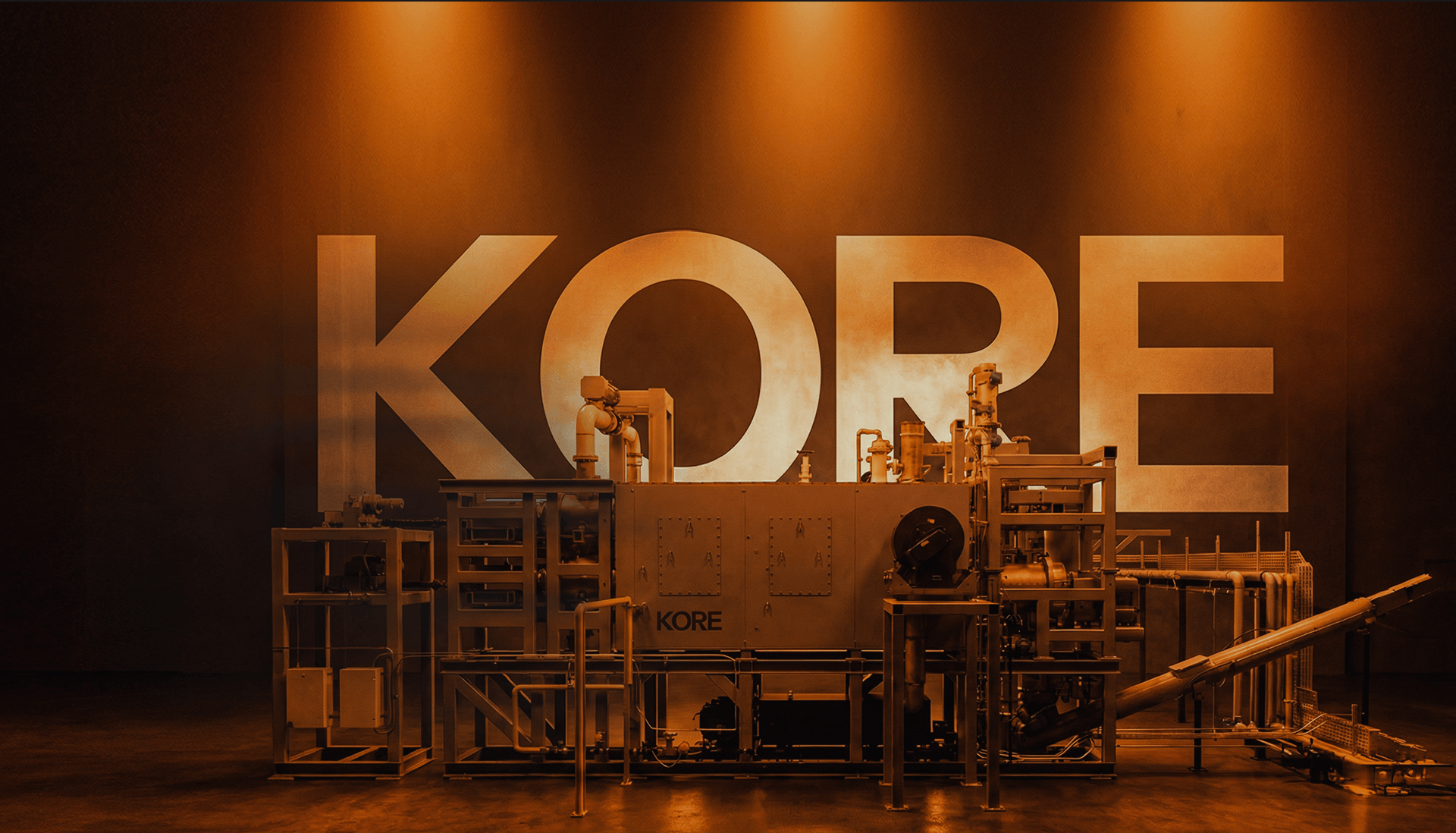
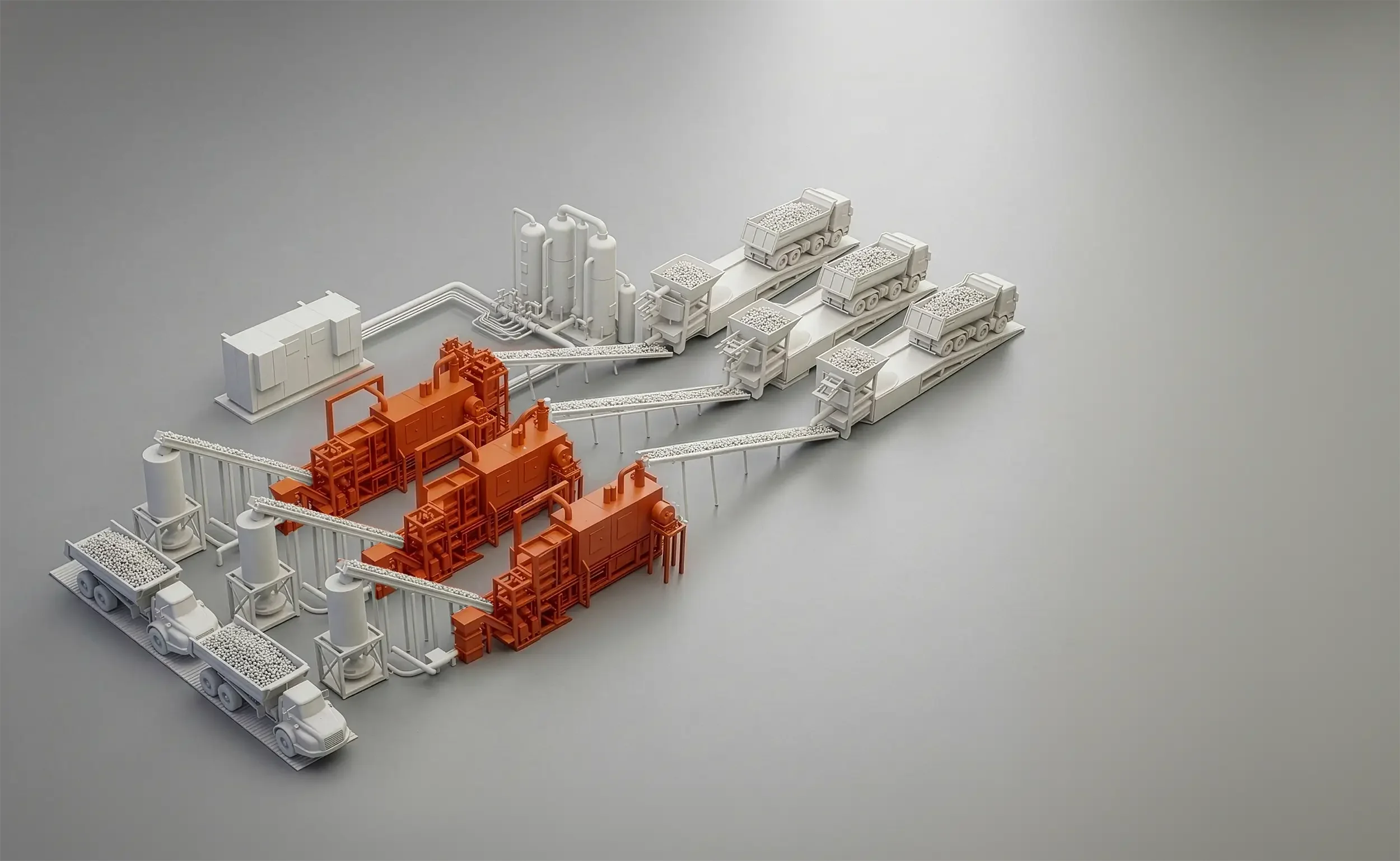
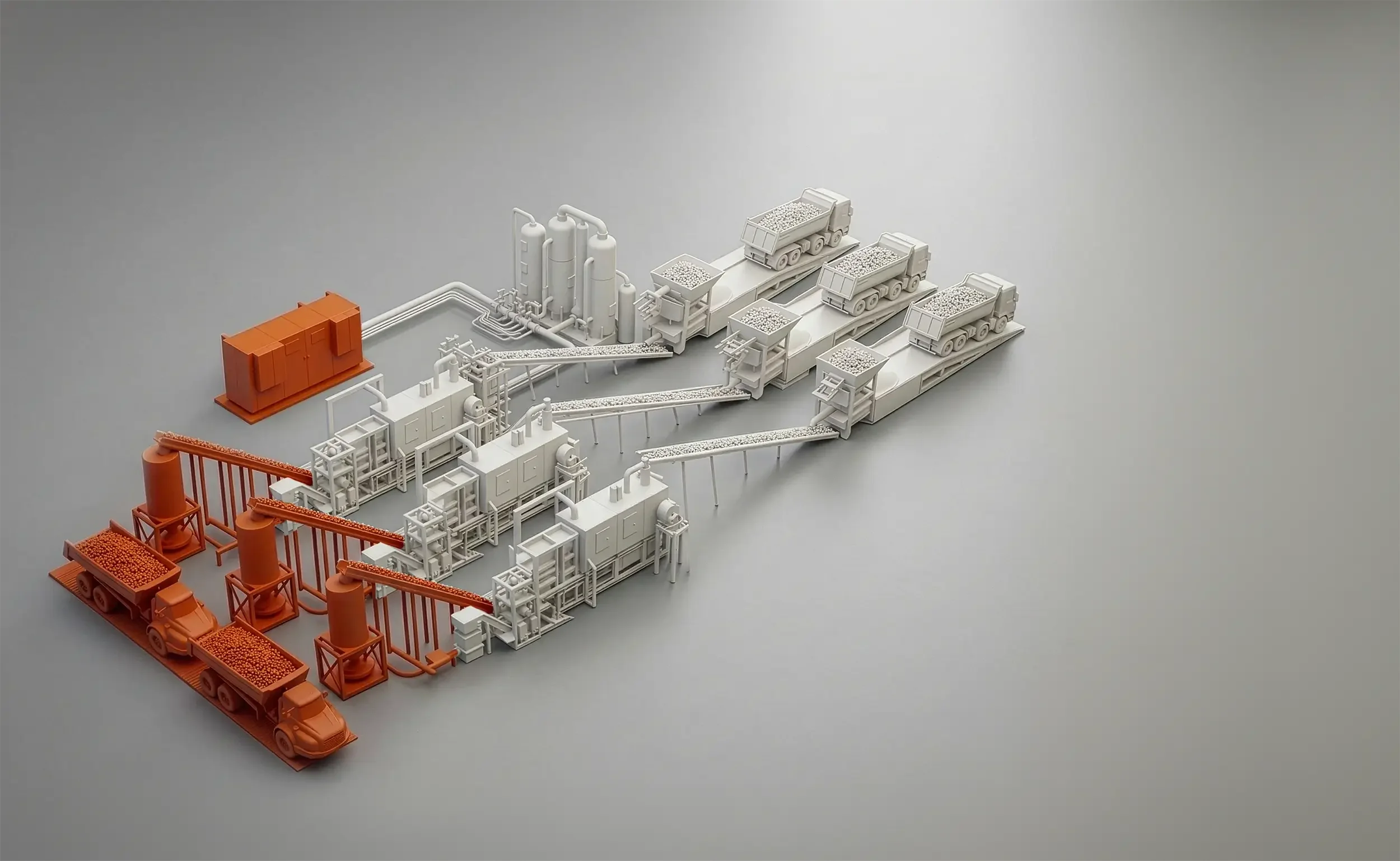
The MX-1 modular pyrolysis platform is Kore’s deployable technology for converting organic waste into baseload power and biocarbon without combustion.
Technology Overview
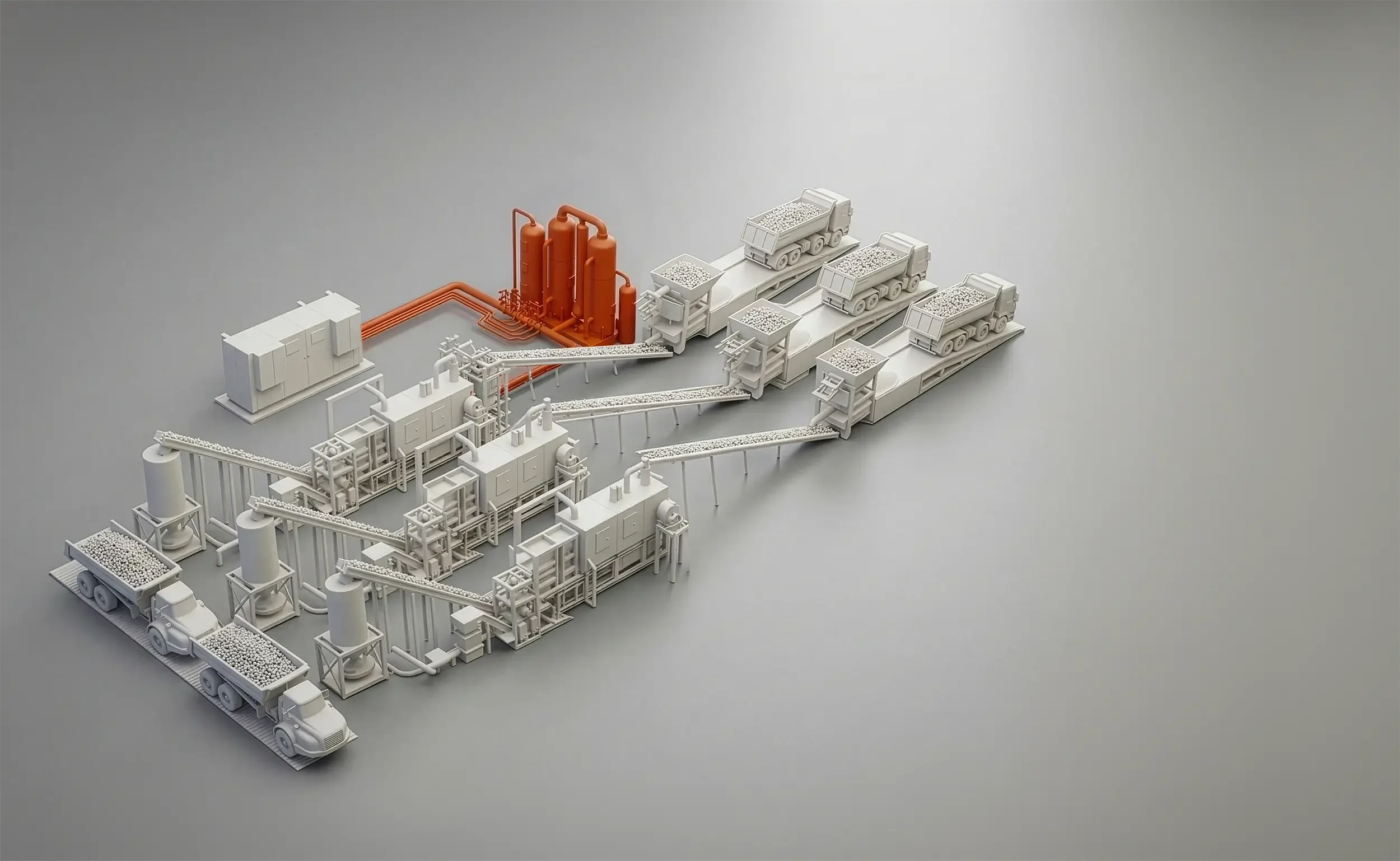
The system accepts a broad range of heterogeneous landfill and biomass-derived feedstocks. It then thermally converts these inputs in an oxygen-free environment to produce a high-quality gas for on-site power generation while also producing biocarbon.
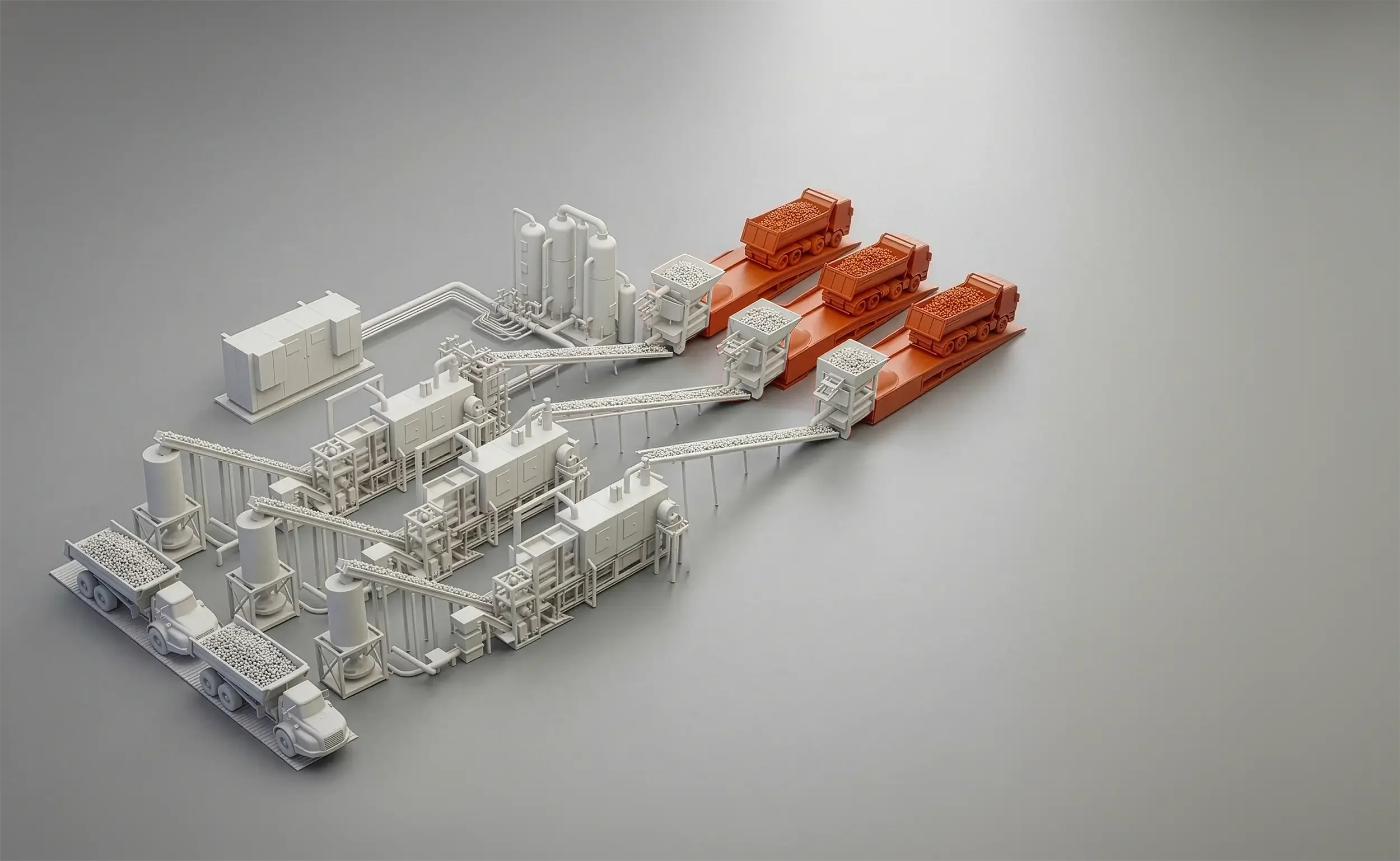
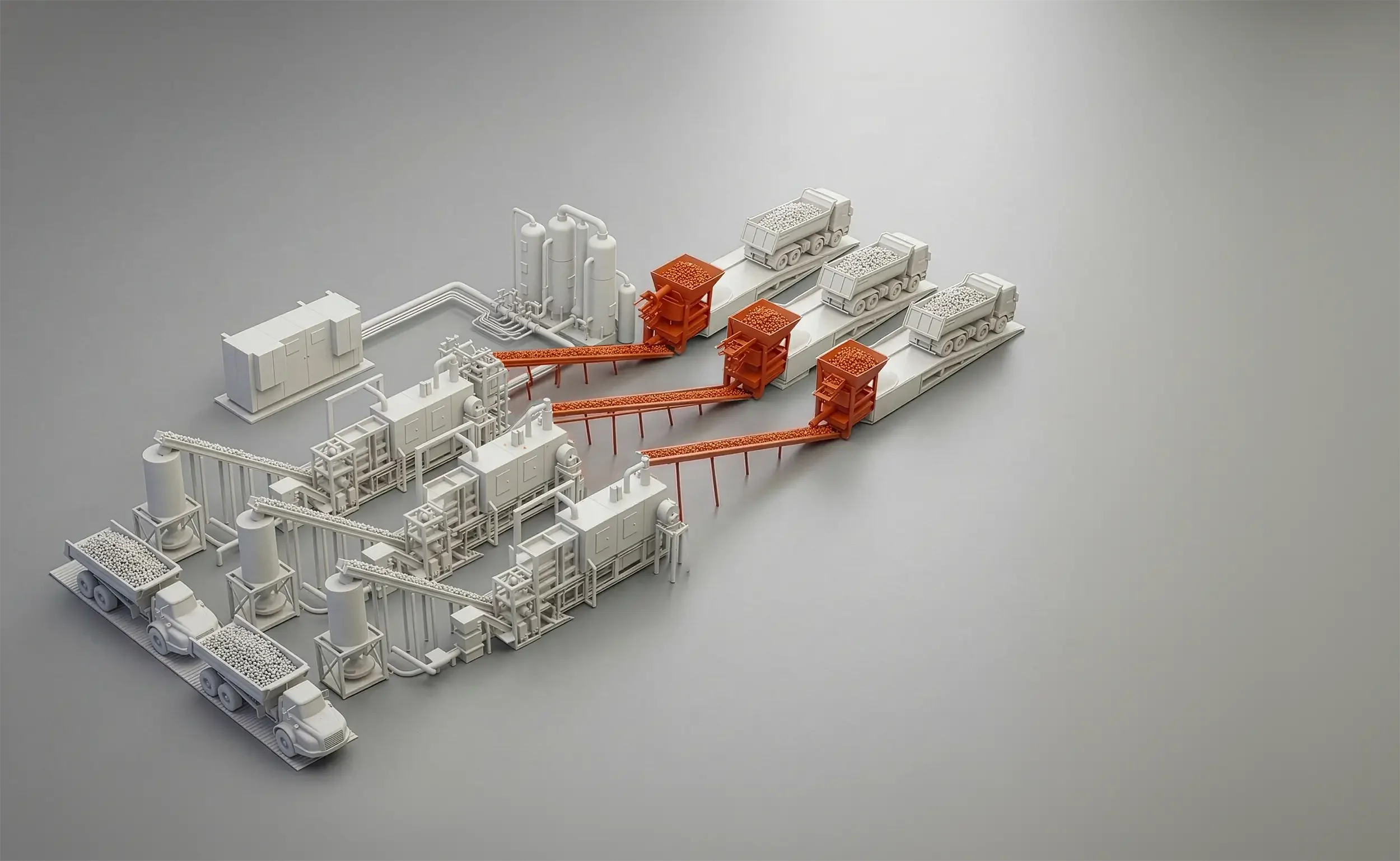
Kore’s MX-1 platform is a modular, continuous pyrolysis system that converts abundant organic waste streams into dispatchable power and stable biocarbon.
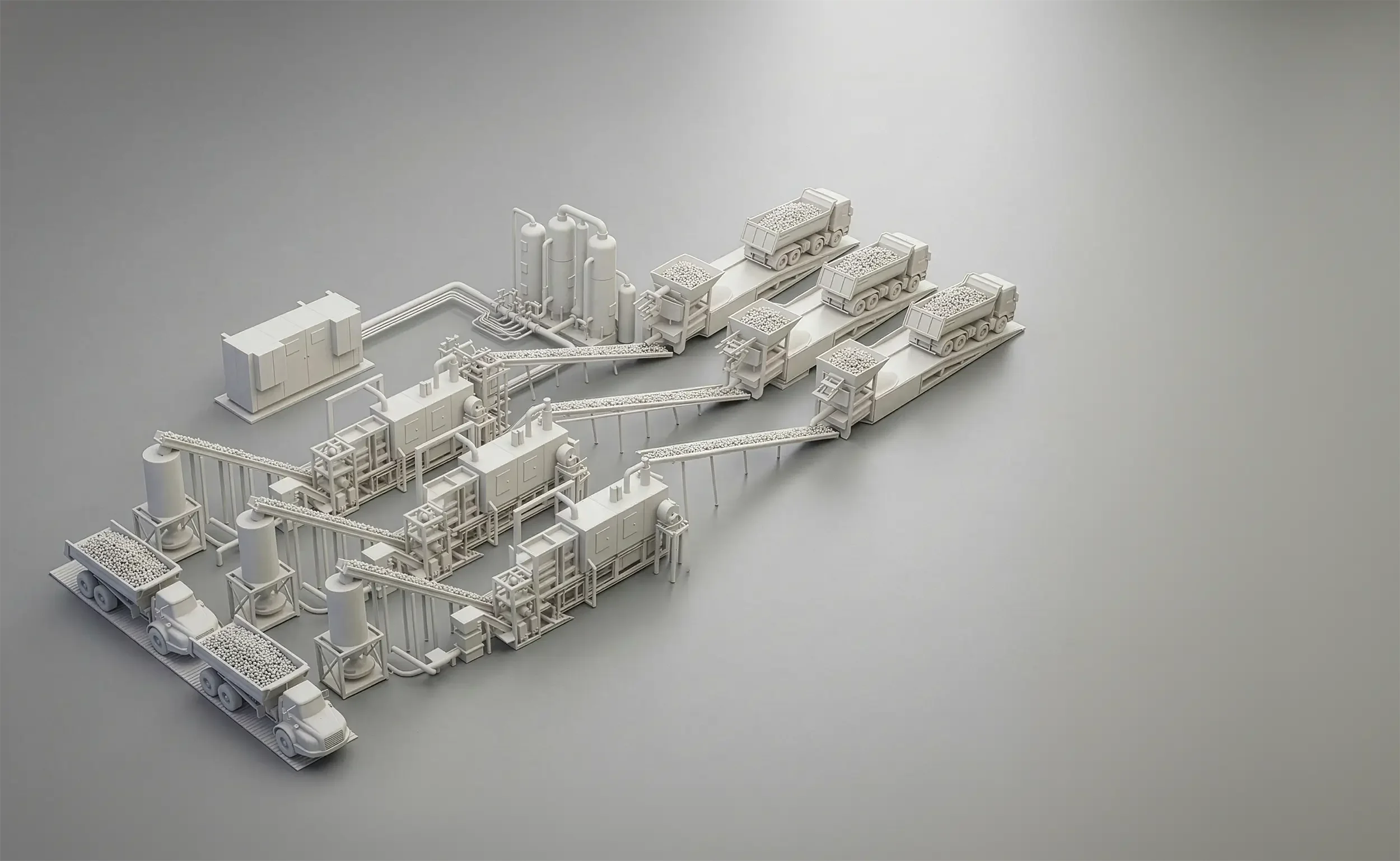
Designed as pre-engineered, skid-mounted modules with a typical site footprint of one acre or less, the MX-1 platform integrates into existing landfill and utility infrastructure and operates continuously.
The closed-loop architecture is energy efficient, delivering reliable baseload electricity while permanently stabilizing a portion of the feedstock’s carbon in solid form rather than releasing it as atmospheric emissions.

process
Key Technical Characteristics
Power Output per Module
Each Kore MX-1 module is designed to generate approximately 1.5 MW of clean baseload electricity, enabling incremental capacity expansion through standardized module clustering.

Thermal Process Type
The MX-1 utilizes a continuous pyrolysis process, that heats organic feedstock in the absence of combustion. Volatile components are converted into gas for energy production while fixed carbon is retained in solid form.

Operating Temperature Range
The system operates at process temperatures exceeding 1,000°F, enabling efficient volatilization of organic compounds and production of a high-quality gas that is suitable for stable power generation.

Continuous Duty Cycle Capability
The MX-1 is engineered for continuous industrial operation, supporting baseload generation rather than batch cycling. The modular configuration allows individual units to operate independently within a cluster, improving overall system uptime and maintenance flexibility.

Emissions Profile
The system relies on non-combustion conversion rather than incineration of raw feedstock; criteria pollutant formation is structurally reduced at the conversion stage. Gas conditioning prior to power generation further supports controlled and permit-compliant emissions performance consistent with distributed industrial energy systems.
Carbon Retention Mechanism
During pyrolysis, a portion of the feedstock's carbon is converted into a stable biocarbon. Unlike combustion, which oxidizes carbon into CO₂, this thermal process preserves carbon in solid form. The resulting biocarbon exhibits structural stability suitable for long-term carbon retention pathways, preventing immediate atmospheric release and enabling measurable carbon sequestration potential depending on end use.

specs and architecture
Modular units
Factory-built modules designed for replication
Clustered to meet capacity needs
Built, owned, and operated by Kore as-a-service for standardized commissioning and operating
Footprint and site fit
Typical installation footprint is about one acre
Designed to integrate into industrial footprints in regulated environments
Compatible with distributed siting and network buildouts
Commercial-scale readiness
Proven at commercial scale in downtown Los Angeles (SoCalGas partnership)
Built for real-world operations
Deploys as modular units co-located at landfills
Integration-first engineering
Interfaces with on-site generation, microgrids, and grid interconnects
Designed for control, monitoring, and performance verification
Built to support operational redundancy strategies
Feedstock & Material Handling
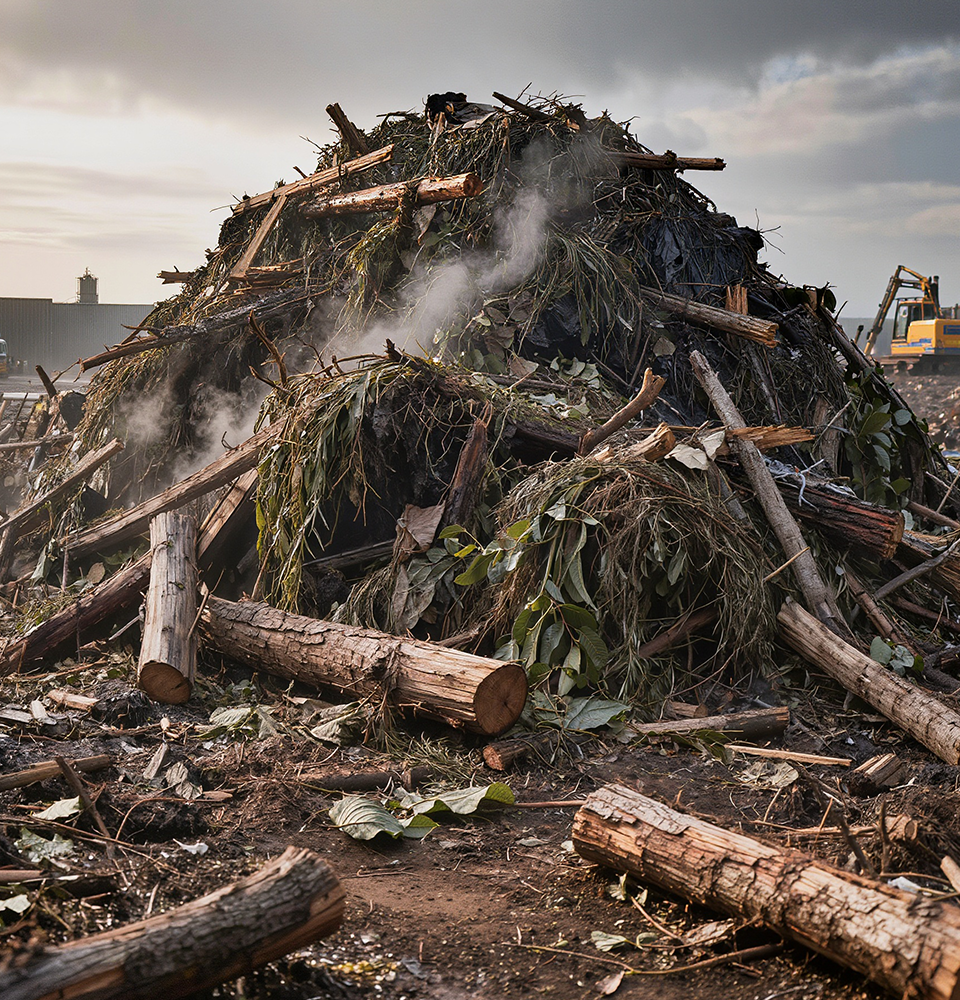
The MX-1 is designed to process a broad range of heterogeneous organic waste streams commonly found at landfills, including wood residues, green waste, and compost overs. The system tolerates typical moisture variability and integrates on-site preparation to ensure consistent thermal performance. Projects are supported by long-term tipping fee agreements, aligning feedstock security with power offtake contracts.
Material Handling AdvantageS
Kore's standardized, multi-stage preparation system delivers:
Uniform feedstock quality for stable reactor performance
Reduced wear and higher uptime through early contaminant removal
Improved throughput via sizing and densification
Lower operational risk despite variable landfill inputs
Stronger bankability through predictable performance modeling
Modular replication from single units to full clusters

Permitting advantage
Kore’s approach accelerates project adoption and community buy iN:
Eliminates “Incinerator” community concerns and reduces potential delays
Removes pollutant concerns associated with combustion-based waste-to-energy
Mitigates uncertainty in environmental review due to unproven emissions profiles
Built for data center demand
Speed To Electrons
Pre-engineered, modular deployment
measured in months
Replicate for Scale
Start with one cluster, add modules as load grows; build MWs with standard and predictable timelines
High Energy Density, Small Footprint
Typical installations fit in roughly ~1 acre
Permittable By Design
Proven in Los Angeles, California, one of the toughest airsheds in the U.S.
Virtual Power Plant-Ready
Build a network of energy nodes and distribute power across markets
Technology Evolution
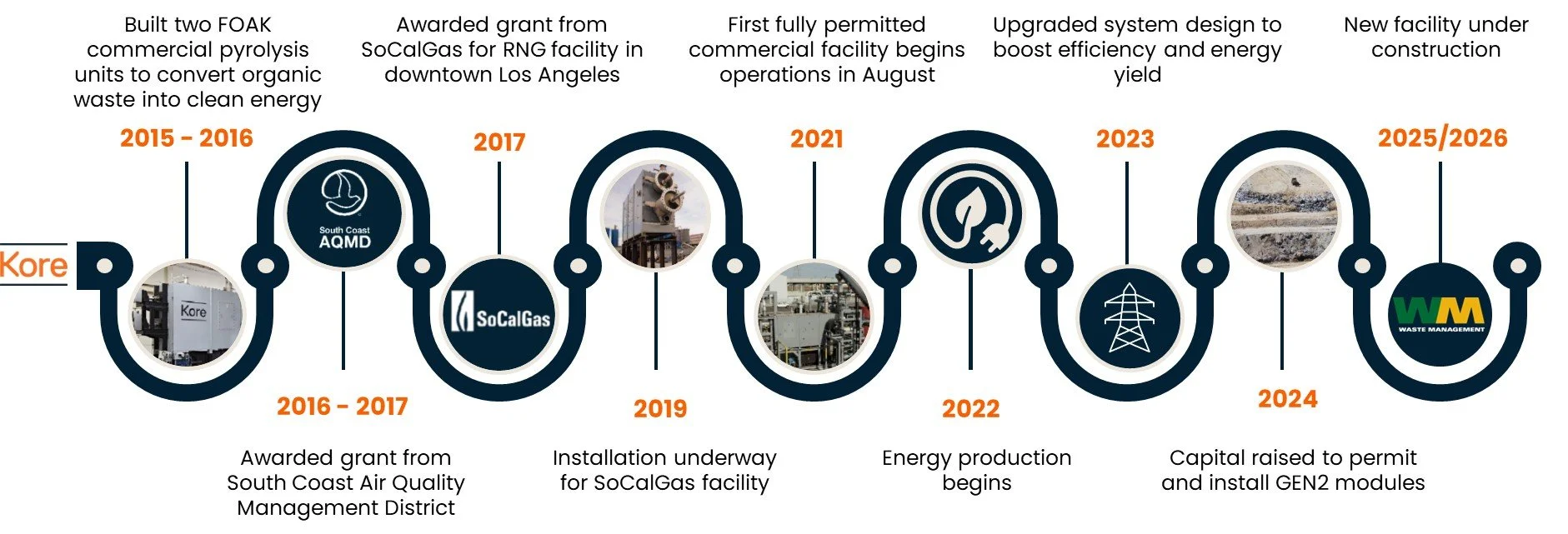
Technology Evolution
Built two FOAK commercial pyrolysis units to convert organic waste into clean energy
2015 - 2016
Awarded grant from South Coast Air Quality Management District
2016 - 2017
Awarded $1.5M grant from SoCalGas for RNG facility in downtown Los Angeles
2017
Installation underway for SoCalGas facility
2019
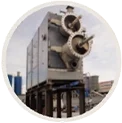
First fully permitted commercial facility begins operations in August
2021
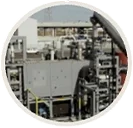
Energy production begins

2022
2023
Upgraded system design to boost efficiency and energy yield
Capital raised to permit
and install GEN2 modules
2024
New facility
under construction